Fuse Bead Patterns: Iron Beads, Grids, and a Chart You Can Finish
Updated August 2026 · ~10 min
Quick Summary
Fuse bead patterns are grid charts for plastic beads that melt together under a dry iron. In shops and search boxes the same craft also shows up as iron beads, Perler, Hama, Artkal, or “melty beads.” The useful pattern is a pegboard-sized plan: one cell, one bead, a short color list, and a size you will actually complete.
What people mean by fuse beads and iron beads
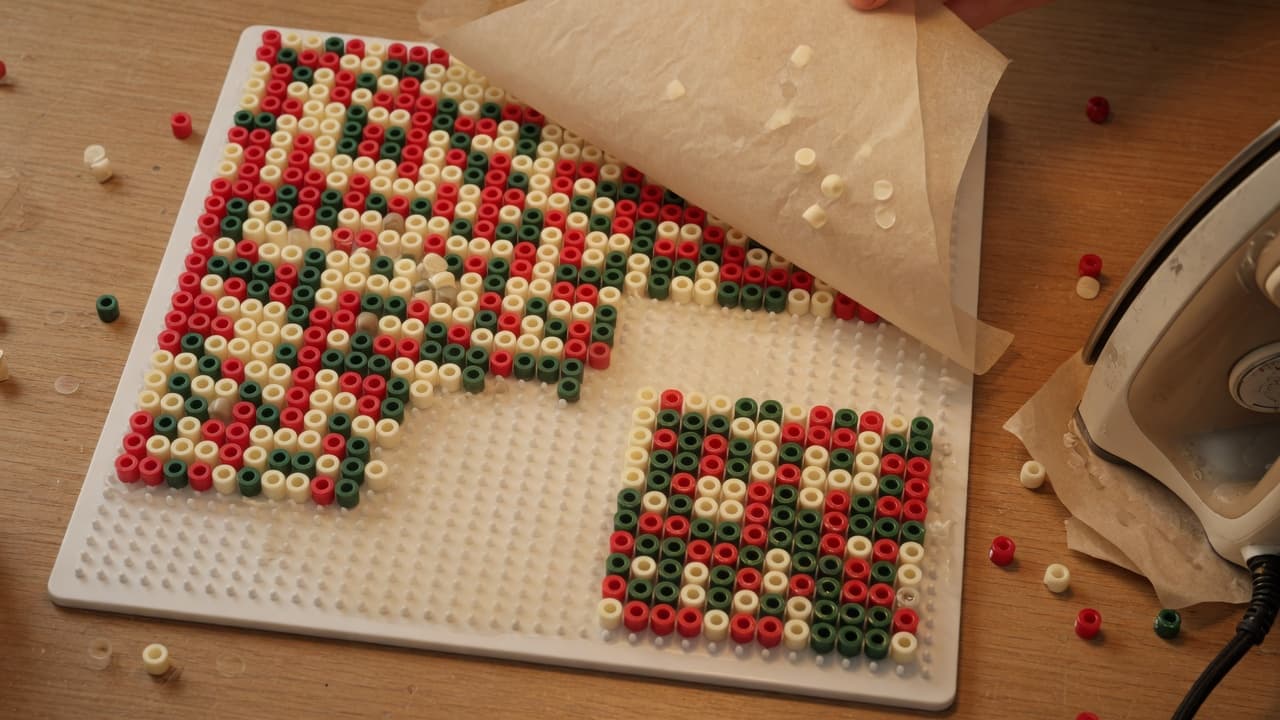
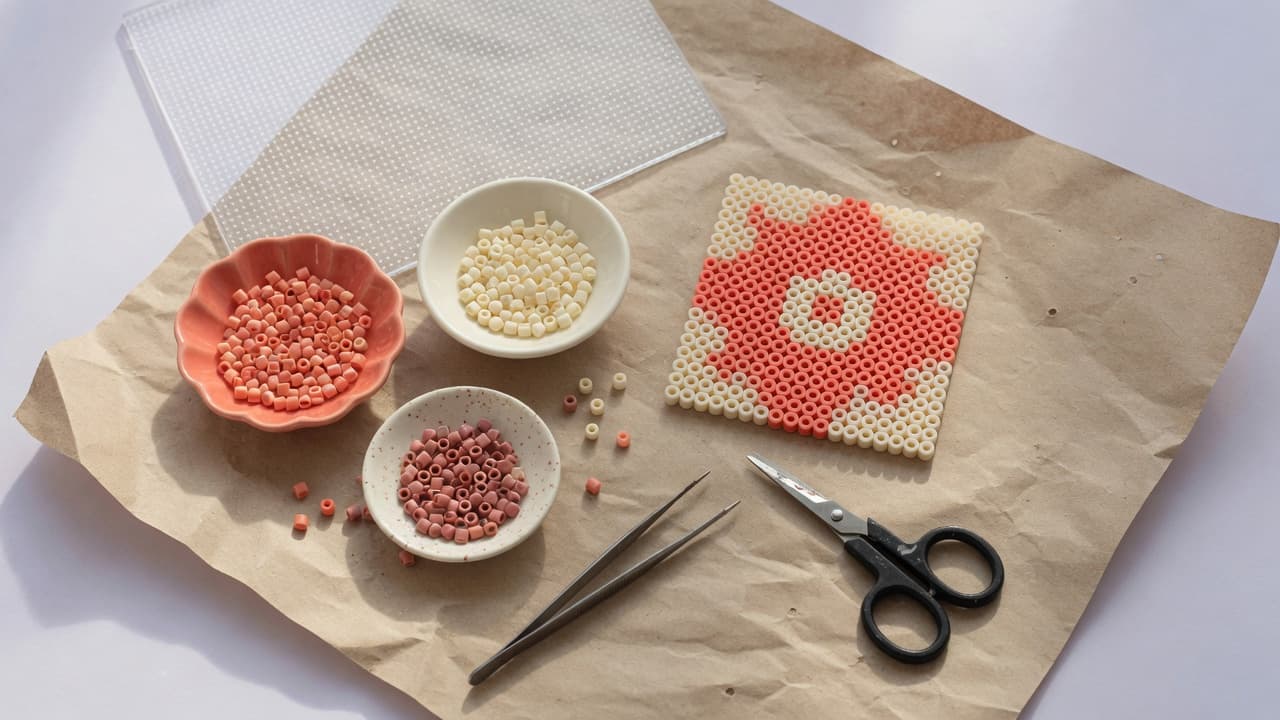
Fuse beads are hollow plastic cylinders you place on a pegboard, cover with parchment or ironing paper, and heat until the tops melt into a sheet. Iron beads is the same idea in plainer English—the iron is the tool, not a separate product line.
Brand names (Perler, Hama, Nabbi, Artkal, IKEA Pyssla, MARD, and others) are tray languages. The cylinders are similar in spirit, but codes and exact diameters are not interchangeable without checking. A pattern that lists a Perler code is useless if your box uses a different system.
What a good fuse bead pattern includes
- Grid size that matches a real board (many kits cluster around long edges of 29, 50, 58, 87).
- A limited palette with codes, not only pretty hex colors.
- Counts per code so you know whether the reds will run out.
- Empty cells marked as empty, not as leftover white beads.
Inspiration photos are not patterns. A converter or a hand-drawn grid is the actual plan. Bead Pixel Art builds that plan in the browser. Images stay on your device. It is not affiliated with Perler, Hama, Artkal, MARD, Nabbi, or IKEA. On-screen colors are planning approximations.
Fuse bead patterns vs a photo dump
| You typed | You probably want |
|---|---|
| fuse bead patterns | A chart you can print or follow |
| iron beads | The craft itself, plus a simple first board |
| perler bead patterns | Often a gallery of finished designs |
This page is the first row: how to get a chart. For a sprite-specific rights note, see Pokemon Perler bead patterns. For iron-and-grid detail, see How to make Perler bead patterns.
How to make fuse bead patterns from a picture
- Choose a subject with a clear silhouette: a mug, a bird, a simple flower, a face with a hard outline.
- Crop until the subject fills most of the frame.
- Set the long edge to a board you own.
- Pick the palette printed on your bags.
- Cap colors near the number of unique trays you have.
- Clear a flat background if the tool offers a key. Empty pegs are cheaper than white beads you will throw away.
- Repair outlines. Generators leave speckles.
- Export the PNG and the list. Place beads. Iron with a paper barrier.
Open the editor if you want that sequence without an account.
Iron settings (soft, not a universal temperature)
- Use a dry iron. Steam pocks the melt.
- Keep a paper barrier between metal and plastic (parchment or the sheet that came with the kit).
- Medium heat is the usual starting zone. Every iron’s “medium” is different.
- Work in short passes. Flip and fuse the other side if you want a firmer sheet.
- Adult supervision if children are placing beads.
Kit inserts and brand FAQs beat a guessed number on a blog. If the plastic browns, you are too hot or too slow. If beads fall off when you lift the paper, you are too cool or too brief.
Sizes that match real pegboards
| Long edge | Feels like | Good first pattern |
|---|---|---|
| 29 | One small square | Icon, fruit, simple animal |
| 50 | An evening | Face, bold logo you drew |
| 58 | Two-board class | More outline, still finishable |
| 87 | A long session | Only if the silhouette stays simple |
Iron beads, Perler, Hama: do you mix them?
You can place similar-sized cylinders on one board. You should not assume they melt at the same rate or that codes match. Mixed brands often show a seam in gloss or height after ironing.
Practical rule: one brand per board unless you are experimenting on a scrap. When you generate a pattern, pick the palette of the beads already in the drawer.
FAQ
Are fuse bead patterns the same as Perler patterns?
Usually yes in structure: a grid of melt-together cylinders. Perler is a brand. Fuse beads and iron beads are generic names for the same craft family.
Do I need special iron beads, or will any fuse beads work?
You need beads sold for pegboard fusing, not seed beads or pony beads. Within that family, buy one brand and map the chart to that brand’s codes.
Can I print fuse bead patterns from a photo on my phone?
Yes. Crop, map to a palette, export a PNG. A browser tool that does not upload the photo is enough for hobby sizes.
Why does my iron-bead board curl?
Uneven heat and fusing only one side. Use paper, keep the iron moving, and fuse the reverse if the sheet stays floppy. Let it cool under a flat book.
Conclusion
Fuse bead patterns are build plans for iron-on plastic grids. Call them iron beads or Perler if that is the bag on your table—the chart still needs a real board size, an honest palette, and a color cap you will finish.